Rice bran, the nutrient-rich outer layer obtained during rice milling, is a highly valued by-product widely used in animal feed production. Vietnam, one of the world’s leading exporters, supplies large volumes of this quality materialto global markets, thanks to its abundant production and efficient processing. Rich in protein, fats, vitamins, and minerals, it offers an economical and nutritious option for livestock, poultry, and aquaculture feeds. In this blog, we explore its definition, production process, benefits, and some specifications of this product.
What Is Rice Bran?
Rice bran is a fraction of raw rice that is removed from the starchy endosperm during the milling process. It is a nutrient-dense by-product of rice processing, composed of the pericarp, seed coat, nucellus, and aleurone layer. This material contains high levels of protein, fat, dietary fiber, vitamins, minerals, and bioactive compounds, particularly oryzanols and tocopherols. At present, it is primarily used as animal feed. It typically appears as a soft, fine powder.
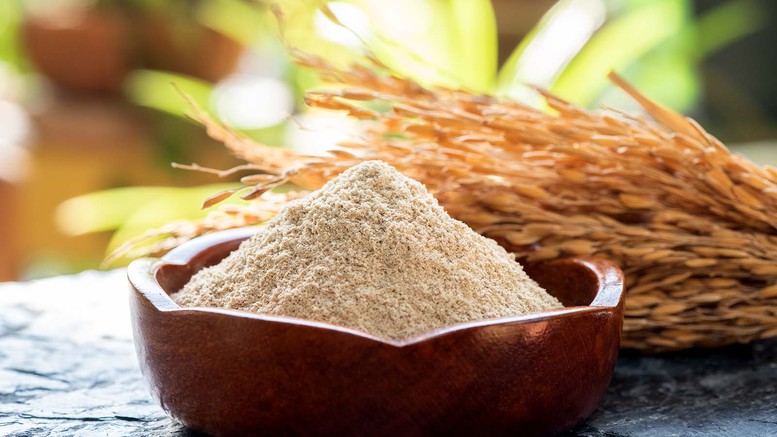
Rice bran is a nutrient-rich by-product of rice milling
How To Produce Rice Bran?
Rice bran is a component of the rice grain. It is a fine, light brown powder layer located between the husk and the white rice kernel, and it is collected during the milling process that converts paddy rice into white rice. This component accounts for approximately 10–12% of the weight of unmilled rice.
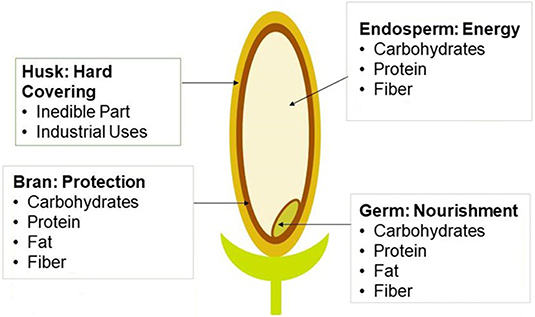
Diagram of a rice kernel. Source: frontiersin.org
Rice harvested from the field in its hulled form is referred to as paddy. During the milling process, paddy produces approximately 60% white rice as the primary product, along with by-products including about 10% broken rice, 20% husk, and 10% rice bran. The figure below illustrates a typical multi-stage commercial rice milling system.
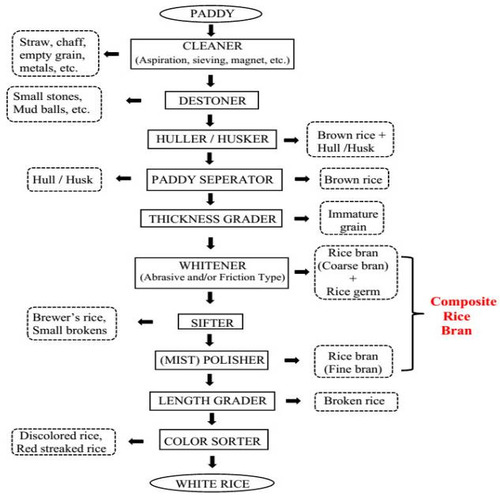
A typical multi-stage commercial rice milling system. Source: National Library of Medicine (NIH)
The rice milling process begins with the removal of the outer hull or husk. The rice husk forms the protective coating of the grain and is composed of approximately 50% cellulose, 25–30% lignin, and 15–20% silica, making it unsuitable for human consumption. As a result, it is mainly utilized for energy production. Carbonized rice husk can also be converted into biochar, which is applied as a soil conditioner, activated carbon, fertilizer processing material, and for other industrial purposes.
Brown rice, also known as cargo rice, is whole-grain rice from which the inedible husk has been removed but the bran layers remain intact. The second stage of milling involves removing these bran layers to produce white rice. Despite the higher nutritional value of brown rice, white rice is more widely consumed worldwide. This feed material is generated as a by-product during this milling process.
Why Is It Commonly Used In Animal Feed Production?
There are several reasons for why rice bran is favorably used in animal feed production.
Rich in nutrients: About 65% of the nutrients in rice are concentrated in the bran layer. In the production of feed for fish and livestock, this ingredient serves as a major nutritional source. It is rich in protein, contains a high level of unsaturated fats, and is abundant in vitamins E, B , phytate, zinc, calcium, and potassium. In addition, it also contains a relatively high amount of omega-3 fatty acids.
Growth and development: With its high content of essential and valuable nutrients, this material helps stimulate the growth of livestock. It meets the high demand for protein and energy, especially during the stages of maturity and reproduction.
Health support: This bran contains a high level of dietary fiber and vitamins, which help support optimal digestion in animals. It can help control body weight, improve gut health, and prevent the accumulation of fatty waste in the digestive system. In addition, it helps strengthen the immune system, enabling livestock to better resist diseases.
Low cost: Rice bran is a by-product of the rice industry and is produced in large quantities, so it is usually low in cost. Using this material in animal feed helps significantly reduce feed costs and brings economic benefits.
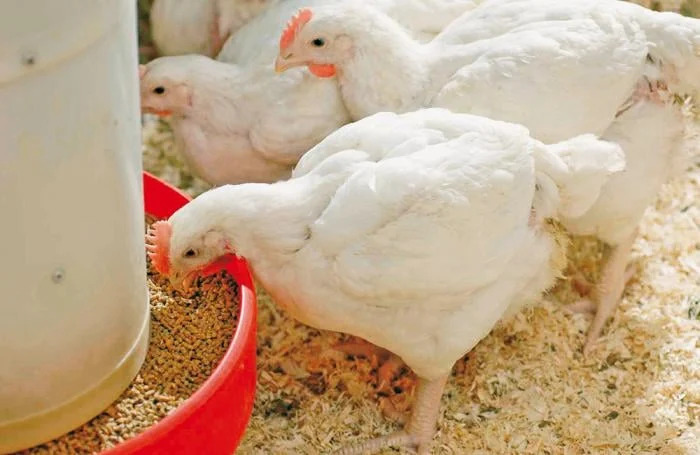
Rice bran is favorably used in animal feed production
Rice Bran For Animal Feed Specifications
Rice bran is commonly produced in the Central Coastal region and the Southern region of Vietnam, especially in the Mekong Delta during March and April. According to the Vietnam Food Association, Vietnam produces approximately 5 million tons of this ingredient each year, a significant portion of which is exported. Recently, both stabilized and extracted forms have become among the first Vietnamese agricultural products approved for official export to China.
Deoiled rice bran
Deoiled rice bran is a product obtained from the process of extracting oil from pure rice bran. This is a high-technology process designed to separate valuable components such as rice bran oil rich in gamma-oryzanol, phytosterols, and tocopherols, as well as dietary fiber, plant protein, and various vitamins and minerals. The extraction of oil from bran does not change its protein content, but it can extend its shelf life.
Specification
- Crude protein content: 16% Minimum (± 1%)
- Moisture & volatile matter: 12% Maximum
- Oil content: 3% Maximum
- Crude fiber content: 8% Maximum
- Ash content: 12% Maximum
Rice bran
- Moisture: 12% Max
- Protein: 10% Min
- Fat: 11% Max
- Fiber: 5.5%
- Ash: 6.0% Max
- Acid value 13 MGKOH/Gram Max
- Starch: 42% Min
- Packing in 50kg/bag
Grade 1 Rice Bran
- Crude Protein: ≥ 8.0%
- Starch: ≥ 60%
- Starch + Crude Fat: ≥ 64.0%
- Moisture: ≤ 12.5%
- Ash: ≤ 4.0%
- Crude Fiber: ≤ 3.0%
- Acid Value: ≤ 8 mg KOH/g
- Passing Rate through 20-mesh sieve: ≥ 85.0%
Viego Global – Your Trusted Sourcing Partner In Vietnam
Given Vietnam’s large production capacity of rice bran, finding a truly reliable supplier can still be challenging. Before starting your sourcing process, consider the following questions:
- Are you going to import rice bran from Vietnam?
- Are you looking for a trusted Vietnamese supplier for different product grades?
- Are you seeking stable supply with consistent quality and competitive pricing?
If your answer is yes for all, please feel free to contact us at:
- Whatsapp line: +84 56 264 6315
- Email: hello@viegoglobal.com
Being present at the economic center of Vietnam, Viego Global can greatly help you professionally source and execute orders, providing maximum benefits to our clients in terms of delivering a wide range of products at the best competitive pricing. Please contact us HERE for further support about the Vietnam Rice bran Industry!